A Historic Treasure in the Heart of Lititz
The Lititz Moravian Congregation was founded in 1749, when local settlers were inspired by the preaching of Moravian ministers and drawn to a faith community rooted in the guiding motto: “In essentials, unity; in non-essentials, freedom; and in all things, love.”
In 1753, George Klein offered his 491-acre farm to establish a Moravian settlement in Warwick Township. By 1756, the village of Lititz was laid out and named in honor of a historic Moravian refuge in what is now the Czech Republic. From its earliest days, the church shaped the religious, cultural, and social life of the community.
The Church & Its Architecture
The present church building, constructed in 1787, is the fifth place of worship for the congregation. After a fire damaged much of the sanctuary in 1957, it was carefully restored to preserve its historic character.
The sanctuary reflects the traditional Moravian “prophetic style,” featuring a high central pulpit, an open Bible, and a beautiful stained-glass window bearing the Moravian Seal — the Lamb of God carrying a banner — and the words, “Our Lamb Has Conquered; Let Us Follow Him.”
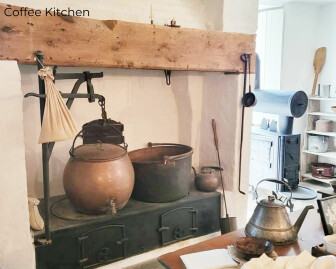
Visitors on guided tours can also step into the historic preparation room, where sweetened buns and coffee were once made for traditional Lovefeasts — a beloved Moravian worship tradition.
A Campus Steeped in History
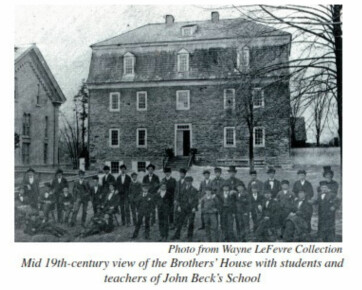
Flanking the church are two limestone buildings constructed in 1758–59: the Single Sisters’ House and the Single Brothers’ House. During the Revolutionary War, the Brothers’ House was used by General George Washington as a military hospital for wounded soldiers. Today, it continues to serve the congregation as a space for fellowship and ministry. The Single Sisters’ House is now part of the Linden Hall School campus.
Just behind the church stands one of Lancaster County’s architectural gems — the 1786 Leichen Kappelchen (Corpse House), once used to hold the deceased prior to burial in the adjoining cemetery. It remains a quiet and meaningful reminder of the congregation’s early customs.
A Legacy of Music
Music has always been central to Moravian worship. In colonial America, some of the finest performances of composers like Bach and Haydn could be heard in Moravian churches. That tradition continues today through choirs, handbells, a Trombone Choir, and contemporary worship music.
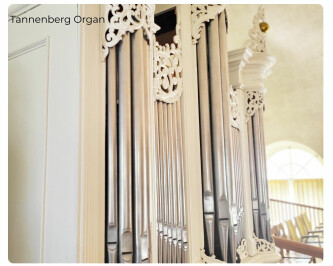
The church is also home to two restored organs built by famed colonial organ maker David Tannenberg, as well as a collection of historic instruments displayed in the church archives museum.
One of the most beloved expressions of music is the congregation’s Christmas Vigil services. Held on specific dates in December, these time-honored gatherings are filled with scripture, candlelight, and sacred music that has been passed down through generations. The sanctuary glows with beeswax candles as the story of Christ’s birth is proclaimed in word and song, creating a deeply moving and unforgettable worship experience for both members and visitors alike.
Step Back In Time - Guided Tours
We invite you to come experience the beauty, history, and vibrant traditions that make our community so unique.
Step inside and discover a legacy of music, faith, and learning that has shaped generations.
Walk our historic grounds, take in the architecture, and feel the living story that continues here today.
We warmly welcome families, vacationing visitors, and school groups who would like to explore while in town.
Guided tours of Church Square are available by appointment and may be scheduled in advance by calling our office at 717-626-8515.
Come experience the tradition for yourself — and discover how the past and present come together in meaningful and memorable ways. We look forward to welcoming you.